Your Desk Is a System, Not a Piece of Furniture
The desk itself is the least important purchase on it. A seven-part system for turning any surface into a command center.
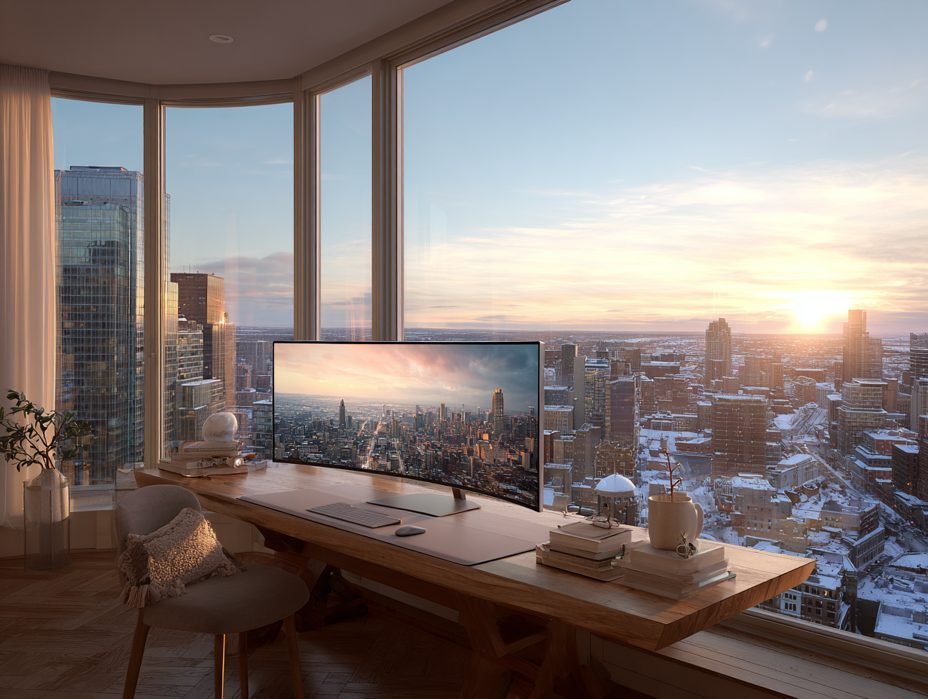
The desk itself is the least important purchase on it. Everything works together or nothing works.

Stop buying a desk
Most desk upgrades fail because they treat the desk as the object and everything else as an accessory. The truth runs the other way. A productive workspace is an interaction: surface, screen, light, seating, cable control, storage, and the zone your hands can reach without thinking. Get the interaction right and a plain table becomes a command center. Get it wrong and an expensive desk is just expensive furniture.

The surface
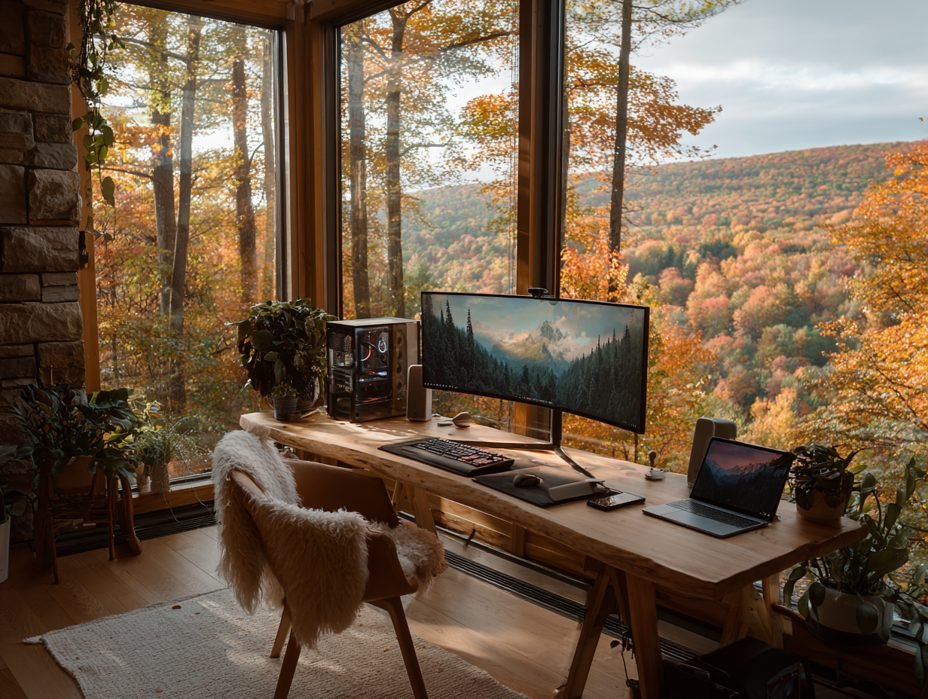
The surface is the stage, not the star. It needs to be large enough that your laptop, screen, notebook, and coffee can coexist without touching, and empty enough that none of them is fighting for position. Depth matters more than width; sixty centimeters from edge to wall gives your screen proper distance and your elbows proper room. The test is simple: clear everything off, then only put back what earns its place.
The screen
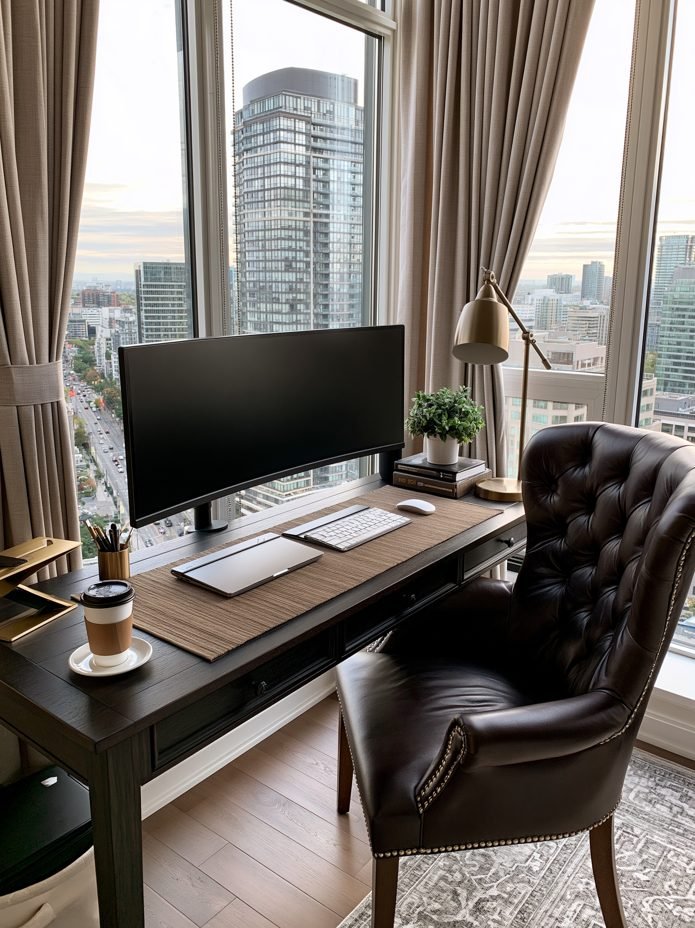
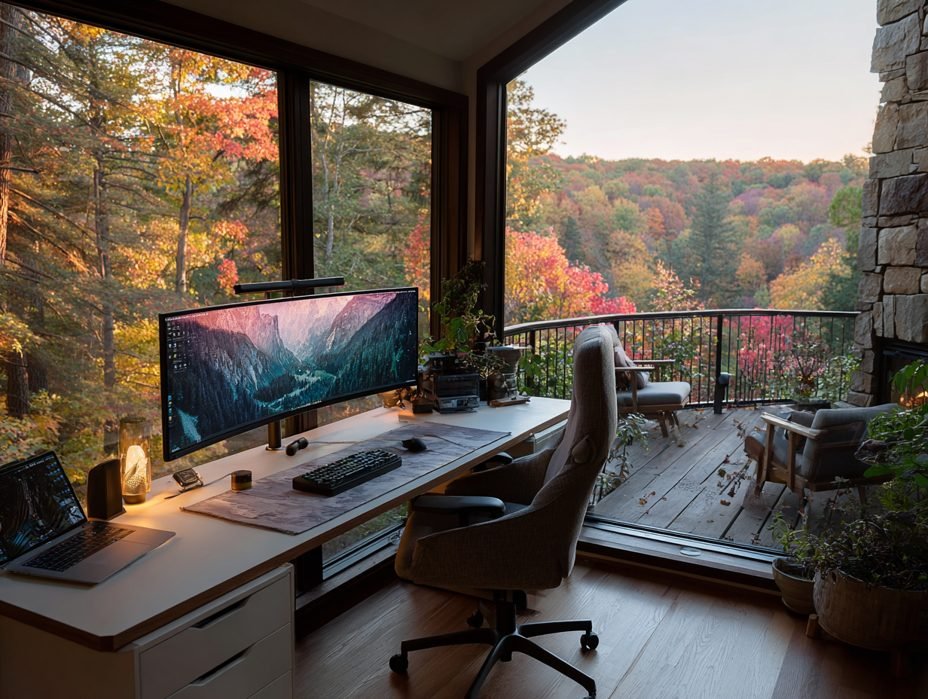
One great screen, positioned well, beats a complicated multi-monitor arrangement for most of us. Eye level or slightly below, an arm's length away, centered on your seated posture. An ultrawide or a single large display at the right distance eliminates the window-shuffling that fragments a workday. Raise a laptop to the same height with a stand and pair an external keyboard. Your neck will bill you later for whatever you get wrong here.
The light
Light is the component nobody buys and everybody feels. Overhead lighting is flat and tiring; a desk lit only by a screen is a headache in waiting. You want layered light: daylight where you can get it, a warm source to the side for the evenings, and controlled light aimed at the work surface rather than at your face. The room should look intentional at 9pm, not like a control room at 3am.

The seat and the support
You will spend more hours in the chair than looking at the screen, so the chair is where the budget goes before it goes anywhere else. Feet flat, hips slightly above the knees, lumbar actually supported rather than merely present. The expensive part of a chair is the mechanism, not the silhouette. A footrest or a cushion under a desk that is a touch too tall solves more back pain than another gadget ever will.

Cable control and storage
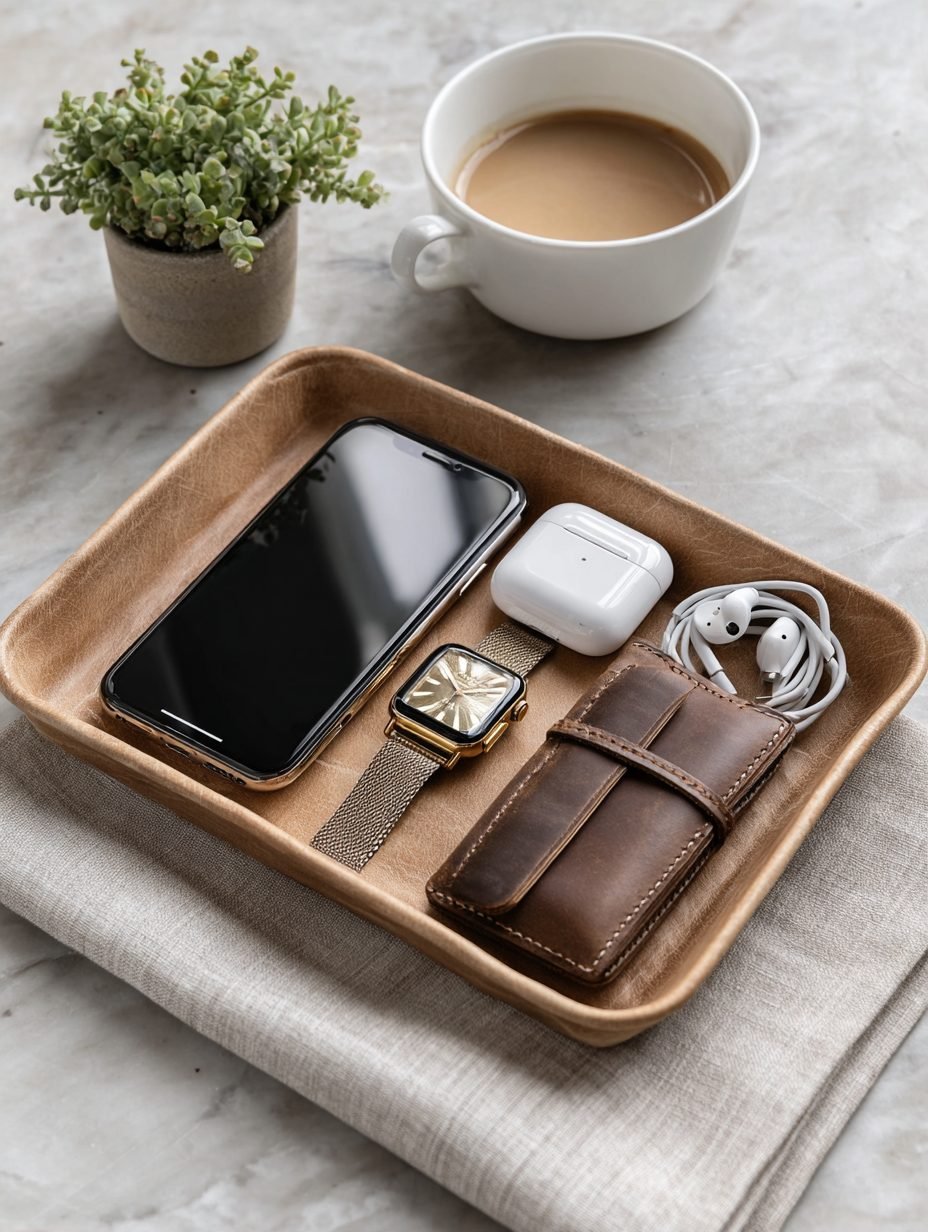
Cables are entropy made visible. Every wire on the surface is a small tax on your attention, and a tangle behind the desk is a tax on your willingness to rearrange anything. Route everything through a tray or sleeve, get the power strip off the floor, and give every peripheral a fixed home: tray for the small daily items, a drawer or shelf for the rest. If you cannot see the floor behind the desk, something is leaking into your headspace.

The assembled system
Now it comes together: the reach zone. Everything you touch constantly lives within an arm's sweep of the keyboard; everything else lives one layer away. Phone, watch, earbuds, notebook in a tray to the side. Headphones on a stand when focus is the plan. Nothing decorative that you do not look at, nothing functional more than a reach away. The system disappears, and what is left is just the work, exactly as it should be.
Sharp & Driven
Sharp & Driven covers style, health, knowledge, ambition and the art of living well. We build economic and cultural capital, and a life of depth.
The Sharp & Driven Edit
One thoughtful email a week — what to read, what to know, what is worth owning. No noise.
Unsubscribe anytime. We never share your address.