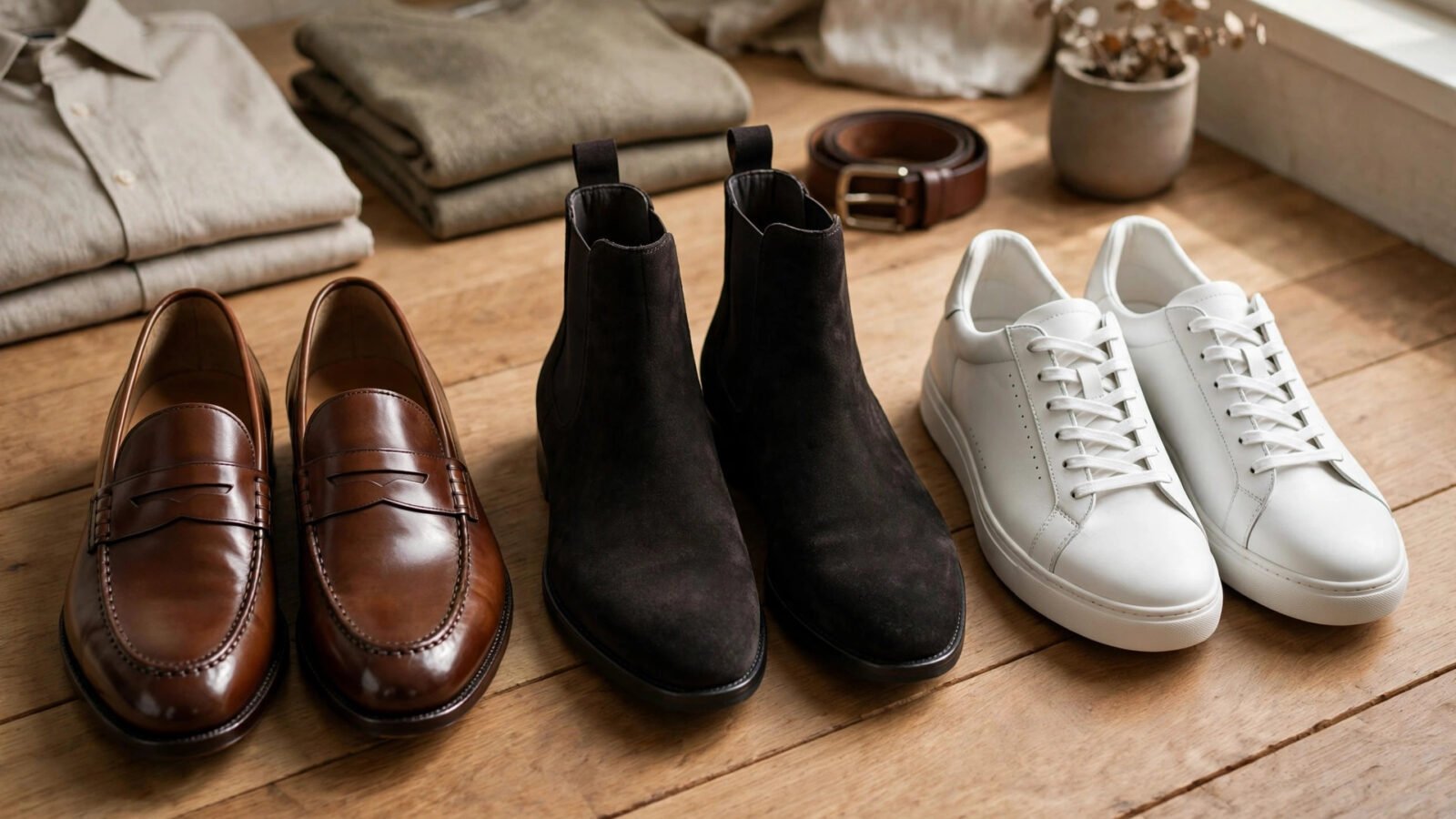

Open the closet of a man who loves shoes and you can read his biography in the boxes. There are the limited editions he queued for and wore twice. The gym shoes that became street shoes that became lawn shoes. The pair he bought on sale because the discount felt like a decision. Most of us do not have a shoe problem. We have a shoe accumulation problem: a dozen pairs that sort of work for everything and truly work for nothing. The fix is not more shoes. It is fewer shoes, better chosen, and worn hard enough to earn their keep.
The five-pair rotation
Almost every life can be covered with five pairs. A clean white or off-white sneaker for everything casual. A leather loafer for everything between casual and dressed. A Chelsea or lace-up boot for bad weather and cold months. A dress shoe, an oxford or derby, for the occasions that matter. And one wild card: the trainer you actually train in, or the summer sandal, or the second boot, depending on how you live. That is the whole system. Everything you buy after that should be replacing one of the five, not adding a sixth category you did not need.
Buy for your real life, not your imagined one
Most unworn shoes were bought for a life their owner does not lead. The patent leather oxfords for galas that never come. The hiking boots for mountains never climbed. Before you buy, audit the last month: what did you actually wear, and where did you actually go? Build the rotation around that evidence. A man who works from home and walks his city needs the sneaker and the loafer far more than the dress shoe. The elegant move is not owning shoes for every hypothetical. It is owning the right shoes for the life you have and upgrading them as that life changes.
Quality is cheaper than quantity
Three pairs of well-made shoes outlast and outclass six pairs of disposable ones, and they usually cost less over five years. Good leather can be polished, re-soled, and revived; cheap materials just degrade into the trash. This is the classic buy-once math, and footwear is where it pays off fastest because shoes take the most abuse of anything you wear. You do not need the most expensive pair in the store. You need full-grain leather, a stitched sole, and a brand with a repair program or a cobbler nearby who can work on them.
Take care of them like they matter
A rotation only works if the shoes survive the rotation. Cedar shoe trees hold the shape and absorb moisture. Rest days matter for shoes the way they matter for muscles: leather needs twenty-four hours to dry out between wears, which is another argument for the rotation. Wipe the sneakers, brush the suede, polish the leather every few wears, not every few months. Ten minutes of maintenance is the difference between shoes that look better at year three than they did at month one, and shoes that look tired by spring.
Let go of the unworn
The final step is the hardest: admit which pairs never made it. The limited editions gathering dust, the sale-rack impulse buys, the aspirational sizes of a different life. They are not a collection; they are clutter with laces. Sell them, donate them, give them to someone who will actually wear them. Every pair that leaves makes the remaining rotation clearer and the closet calmer. Men with great style are not the ones with the most options. They are the ones whose every option is a good one. Fewer sneakers, better shoes, and nothing you would not wear tomorrow.

1 Comment