Things You Didn’t Know Greece Gave Us
Democracy, the Olympics, theater, philosophy, the marathon, medicine, geometry, the alphabet: what a small stretch of the Mediterranean actually invented.
Everybody knows Greece gave us great vacations. Fewer people realize it also gave us the operating system the modern world runs on. Before you go, or the next time someone mentions Athens, here's what that small stretch of the Mediterranean actually invented. It will change the way you walk through it.
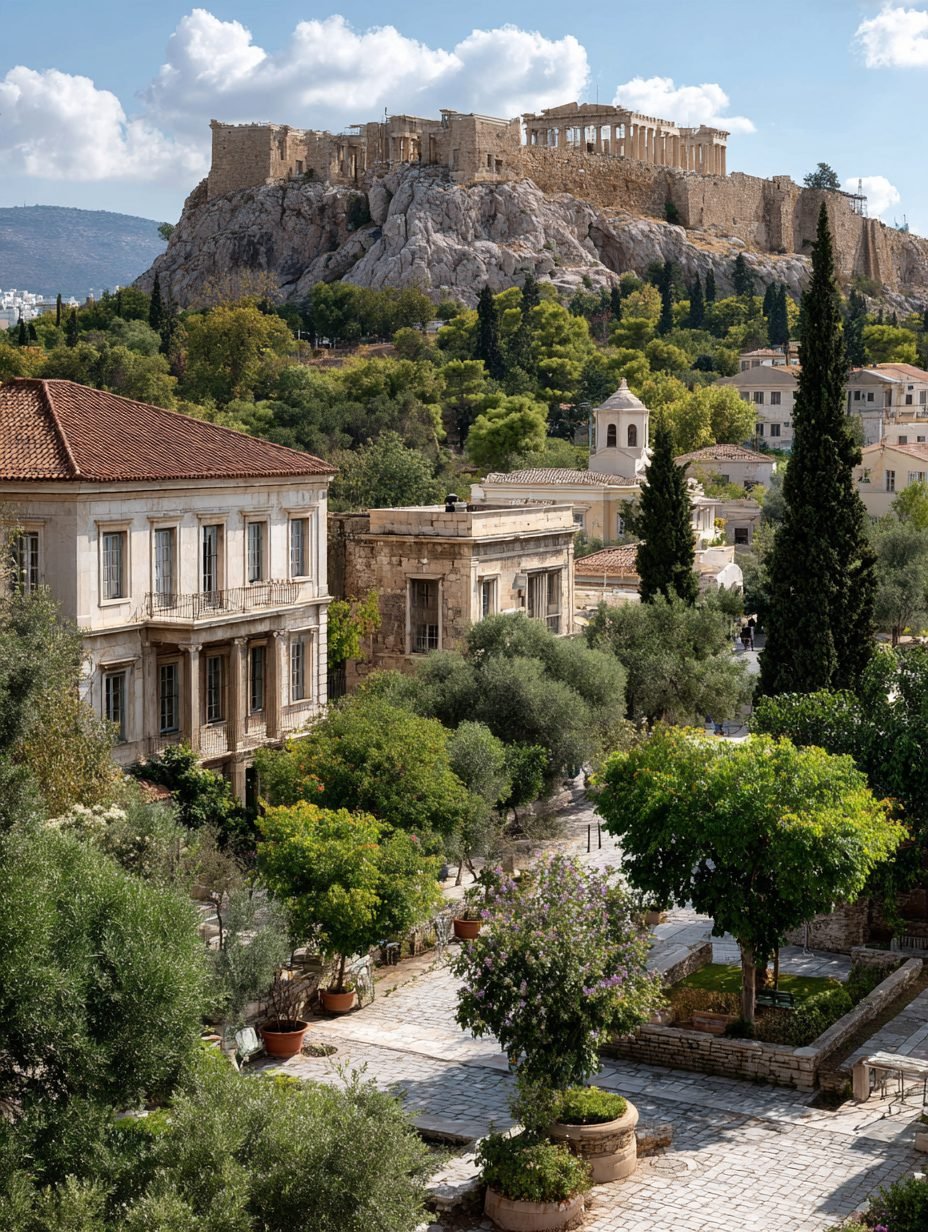
Democracy: The Vote Itself
The word is Greek: demokratia, "rule by the people," and so is the idea. In 5th-century BC Athens, citizens gathered to vote directly on laws and decisions. No representatives as middlemen; you showed up and raised your hand. Modern democracy is representative rather than direct, but the core proposition, that ordinary people rather than kings should get a say, was an Athenian invention, and it was radical. In Athens itself that meant free adult male citizens only: women, enslaved people, and resident foreigners were excluded.
The didn't-know-it part: Athenian citizens were even paid a small stipend to attend the assembly, because they understood that participation has a cost.
The Olympics: The Original World Stage
The first recorded Olympic Games were held in 776 BC at Olympia, in honor of Zeus, and they ran for nearly 12 centuries. City-states at war declared a sacred truce so athletes could travel safely. Sound familiar? The modern Games revived in 1896 deliberately copied the ancient formula: every four years, the world's best, one stage.
The didn't-know-it part: Ancient Olympians competed nude, and the only prize was an olive wreath: the original "it's the honor, not the money."
Theater: Tragedy, Comedy, and the Drama Club
Athens invented theater as we know it, literally. Tragedy and comedy were both Athenian art forms, performed in massive open-air amphitheaters like Epidaurus (which seats 14,000 and still hosts performances with perfect acoustics, no microphones). Playwrights competed at festivals; audiences of thousands debated the winners.
The didn't-know-it part: The words tragedy, comedy, drama, theater, chorus, protagonist: all Greek. Every playbill you've ever read is written in their vocabulary.
Philosophy: Learning How to Think
Socrates, Plato, and Aristotle: three figures rooted in the Athenian intellectual world who essentially invented the discipline of asking hard questions well. Logic, ethics, political theory, the scientific method's ancestors: the toolkit for reasoning about anything was assembled in Greece. The word philosophy itself means "love of wisdom."
The didn't-know-it part: Socrates never wrote a word down. Everything we know of him comes from his students' notes: the original "the lecture was the product."
The Marathon: 26.2 Miles of Legend
The marathon exists because of a story: after the Athenian victory at Marathon in 490 BC, a messenger reportedly ran to Athens with the news. Whether or not Pheidippides actually did it, the legend stuck, and when the modern Olympics were revived, the marathon became their signature event at roughly the legendary distance: 42.195 km.
The didn't-know-it part: The marathon's exact length (26 miles, 385 yards) was set because the 1908 London Olympics wanted the race to finish in front of the royal box. A Greek legend, finalized by British royalty.
Medicine: The Oath Doctors Still Take
Before Hippocrates, illness was blamed on angry gods. His school insisted on observation, prognosis, and ethics instead: medicine as a science rather than superstition. Doctors still swear a version of the Hippocratic Oath today, and the principle often summed up as do no harm is a 2,400-year-old idea from that tradition.
The didn't-know-it part: The Staff of Asclepius (the single serpent-entwined staff, not the caduceus of Hermes) and the entire vocabulary of medicine, diagnosis, prognosis, therapy, surgery, are Greek hand-me-downs.
Geometry: The Math Under Every Building
Euclid's Elements, written in Alexandria around 300 BC, was the geometry textbook for the next two thousand years. Pythagoras, Archimedes, the proof as a concept: the Greeks turned mathematics from counting into reasoning. Every bridge, building, and phone in your pocket runs on math they formalized.
The didn't-know-it part: The word mathematics comes from the Greek for "that which is learned." They considered it a branch of philosophy, not a separate subject.
The Alphabet: The Letters You're Reading
The word alphabet is just alpha + beta: the first two Greek letters. The Greeks took the Phoenician script and added vowels, creating the first true alphabet, the direct ancestor of the Latin letters you're reading now (and the Cyrillic script too). Reading this sentence is a Greek activity.
The didn't-know-it part: Thousands of everyday English words, from democracy to telephone, trace back to Greek roots. You're speaking it every day.
The takeaway
Democracy, the Olympics, theater, philosophy, the marathon, medicine, geometry, the alphabet: one civilization, and it was the size of a modest American state. That's why Greece isn't just a destination; it's a pilgrimage. Walk the Pnyx where citizens voted, sit in Epidaurus where theater was born, stand in Olympia where the Games began, and you're not sightseeing. You're visiting the source code.
Part of the Sharp & Driven travel cluster: start with 6 Destinations That Build Cultural Capital, featuring Athens.

Sharp & Driven
Sharp & Driven covers style, health, knowledge, ambition and the art of living well. We build economic and cultural capital, and a life of depth.
The Sharp & Driven Edit
One thoughtful email a week — what to read, what to know, what is worth owning. No noise.
Unsubscribe anytime. We never share your address.