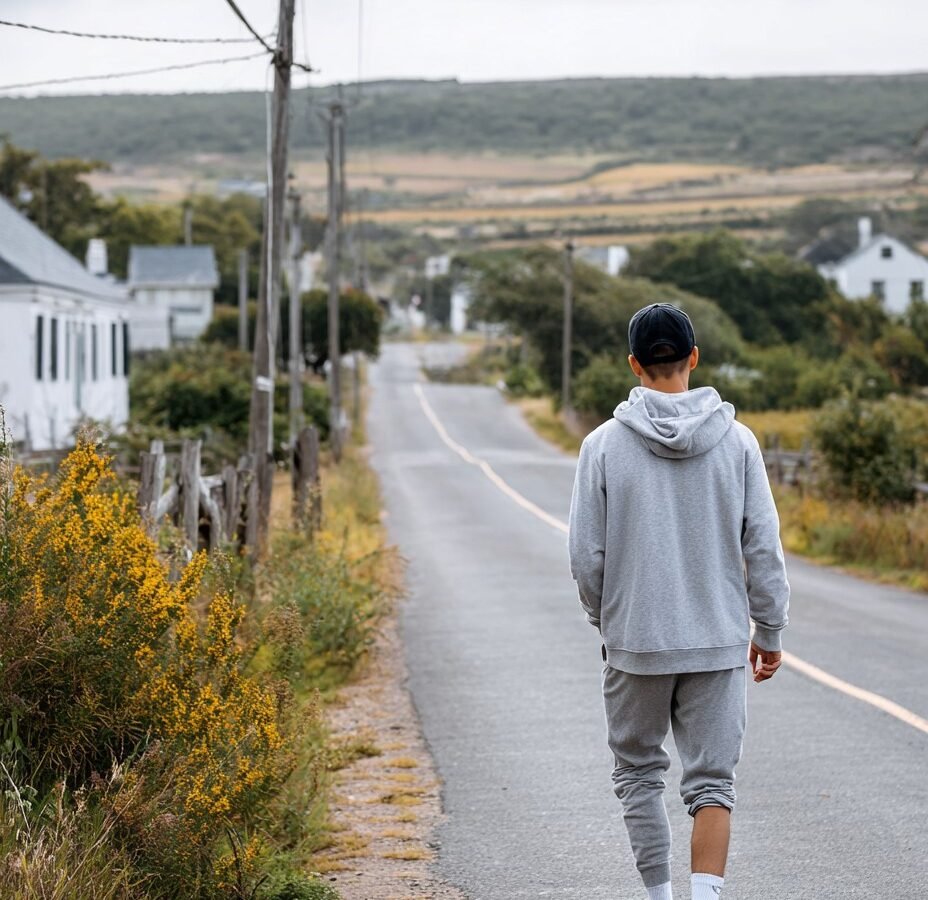

Every few years the fitness industry rediscovers something ancient, renames it, and sells it back to us. Right now the rediscovery is walking, which is funny, because walking never went anywhere. It was just waiting for us to notice that the simplest movement we know is also one of the most powerful. No membership. No equipment. No app required. Just shoes, a door, and a direction.
We tend to dismiss walking precisely because it is easy. If it does not hurt and does not require booking, can it really count? It can. The evidence for walking keeps stacking up across exercise, mental clarity, stress, and even how well we travel. The underrated things are underrated because they are boring, and boring is what we can actually sustain.
The exercise that does not feel like exercise
A brisk daily walk does more than most people give it credit for: cardiovascular conditioning, joint health, blood sugar regulation, and a meaningful calorie burn that adds up quietly over weeks. It is also the rare form of exercise with almost no barrier to entry. There is no learning curve, no intimidation, no recovery day that ruins your week. You can be out of shape and start today, and you can be fit and still benefit.
The deeper advantage is psychological. Hard workouts create a negotiation every single time: will I go, am I up for it, what if I skip just today. Walking rarely triggers that negotiation because the cost of starting is so low. And the fitness habit that wins is not the most impressive one. It is the one that survives your actual life, week after week, year after year.
A thinking tool disguised as a habit
Some of the best thinking in history happened on foot. The rhythm of walking seems to unlock a particular kind of mental processing: not the sharp focus of a desk, but a looser, associative state where stuck problems start moving. Writers, founders, and scientists have all sworn by it, and modern research backs the intuition that walking boosts creative output.
There is a practical version of this for the rest of us. Take the problem you have been circling at your desk and take it for a walk instead. No phone, or at least no scrolling. Give it twenty minutes. You will come back with either a solution or a better question. Walking is thinking with your whole body.
Stress leaves the body through the feet
Stress is physical before it is mental. It lives in the shoulders, the jaw, the shallow breathing. Movement is the fastest way to tell your nervous system that the emergency is over, and walking is the most available form of movement there is.
This is why the evening walk has survived every productivity trend. Ten to thirty minutes after a hard day does something that scrolling and streaming do not: it metabolizes the tension instead of just distracting from it. Pair it with a few minutes of stillness afterward, even a short meditation, and you have a complete decompression ritual that costs nothing and works every time.
Walking makes travel better
There is a reason the best travel memories rarely happen in transit. They happen on foot: the side street you would never have found in a car, the market you smelled before you saw, the neighborhood that only reveals itself at walking pace. Walking is the highest-resolution way to experience a place. Everything else is a summary.
Make it a travel habit on purpose. On the first morning in a new city, walk without a destination for an hour before you check any map. You will learn the place in your body, not just on your screen. The travelers who walk the most consistently report the richest trips. That is not a coincidence.
Pair it with silence, or with something worth hearing
What you do with your attention while walking shapes what you get from it. Silence is the underrated option: no podcast, no calls, just the street and your thoughts. In a life saturated with input, a silent walk might be the only true quiet you get all day, and the mind does remarkable maintenance work when it is finally left alone.
That said, walking is also the perfect container for the good stuff: the long phone call with a friend, the audiobook you never have time for, the language lesson, the podcast worth your attention. The rule is simple. If the input is deliberate, the walk gets better. If the input is just filling silence, try the silence instead. You might be surprised which one you needed.
Start smaller than you think
The mistake people make with walking is the same mistake they make with everything: they turn it into a project. Ten thousand steps, a new route every day, a tracking streak to maintain. Then life happens, the streak breaks, and the shoes go back in the closet. Walking does not need a project. It needs a default.
Pick one walk and anchor it to something you already do: after lunch, after dinner, after the workday ends. Ten minutes is enough to start. The goal is not distance or speed. It is the identity of a person who walks every day. The most underrated habit is the one you will still be doing in ten years. Make it this one.