
Most small balconies live the same sad life. They become a storage annex for the drying rack, a dead plant, and a chair nobody sits in. Which is a shame, because square footage is not what makes an outdoor space work. Intention is. A balcony the size of a parking space, treated like a real room, can change your mornings, your evenings, and your relationship with the apartment around it.
The mistake is thinking of the balcony as leftover space. Treat it as the smallest room in your home and design it with the same seriousness you would give any other room. It needs a purpose, the right scale of furniture, light, and something alive. Get those four things right and the smallest balcony becomes the seat everyone fights over.
Measure first, then buy furniture that fits the room
Scale is everything on a small balcony, and it is where most people go wrong. Full-size patio furniture swallows the space and leaves no room to move, which is why the balcony ends up unused. Measure the actual floor, including the door swing, and then shop for pieces made for the dimensions you have, not the ones you wish you had.
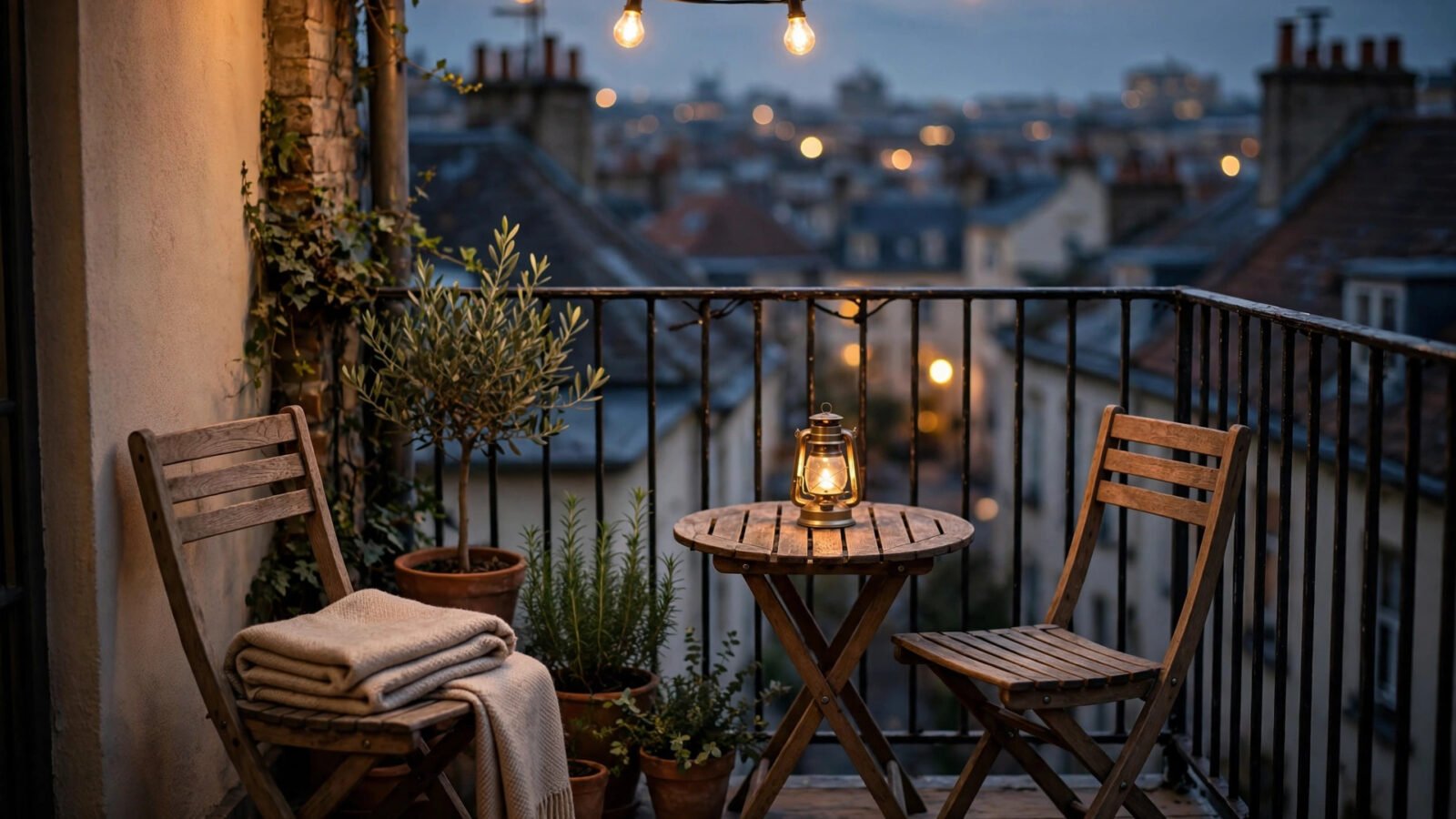
The classics exist for a reason: a compact bistro set, a folding cafe table with two chairs, or a narrow bench along the railing. Folding and stackable pieces earn their keep because the balcony sometimes needs to be a yoga spot or just empty. Leave clear walkways. A balcony you have to climb over furniture to reach is a balcony you will stop reaching.
Light it like you mean it
A balcony with no lighting is a balcony that disappears at sunset, which is exactly when you would want to use it. Overhead building lights are usually harsh and unflattering. The fix is warm, low, layered light: string lights along the railing, a lantern on the table, maybe a small solar stake in a planter. Warm white, not daylight. You are building atmosphere, not a workspace.
Lighting is also the cheapest transformation in this whole article. A single strand of outdoor string lights costs little and does more for the feeling of the space than almost any furniture purchase. When the balcony glows at night, it pulls you toward it. And seen from inside through the glass doors, a lit balcony makes the whole apartment feel larger and more alive.
Go green, even if you have no garden skills
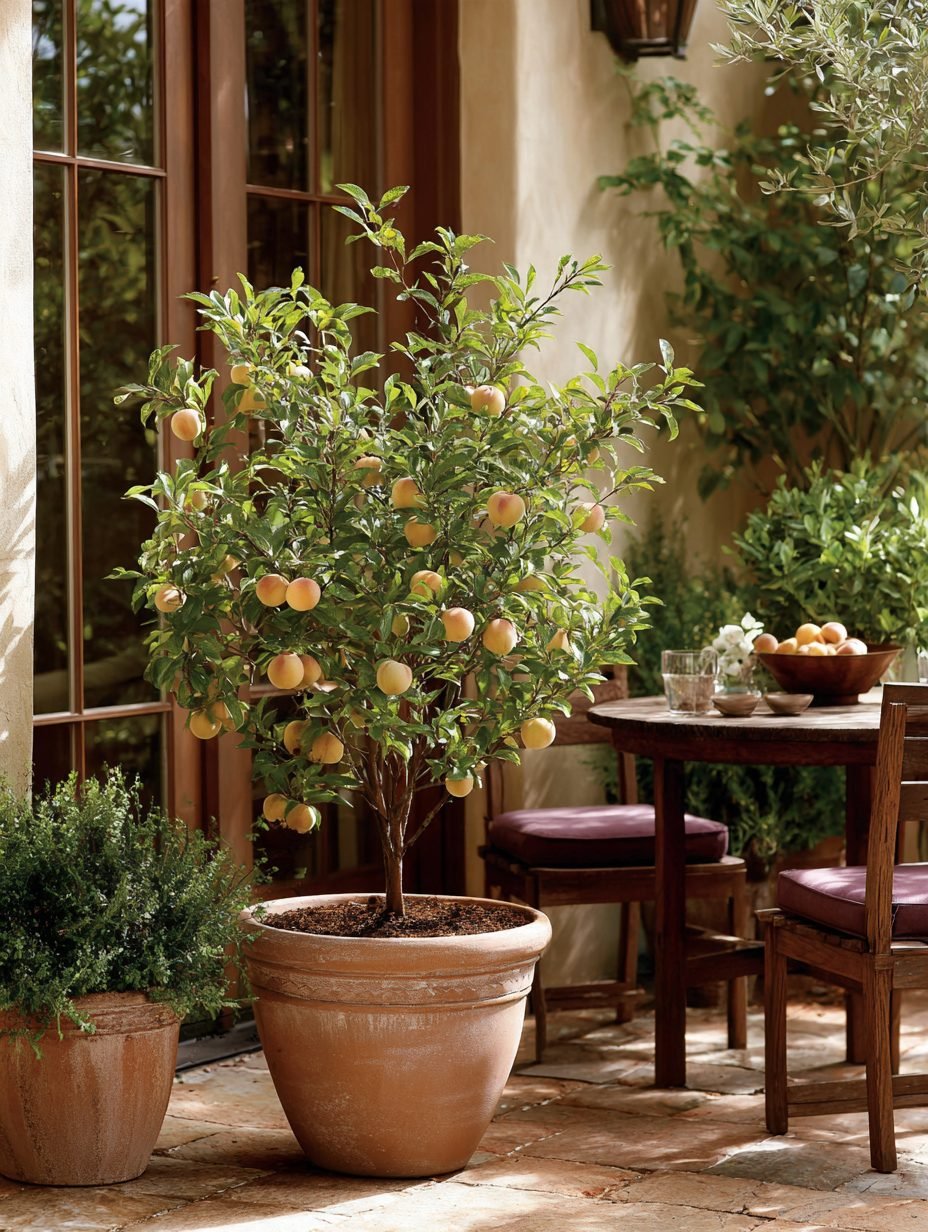
Greenery is what turns a balcony from a platform into a place. Plants soften the hard edges, add privacy from neighboring buildings, and give you something alive to tend, which turns out to be quietly satisfying. You do not need a green thumb. You need the right plants for your light conditions and a watering routine you will actually keep.
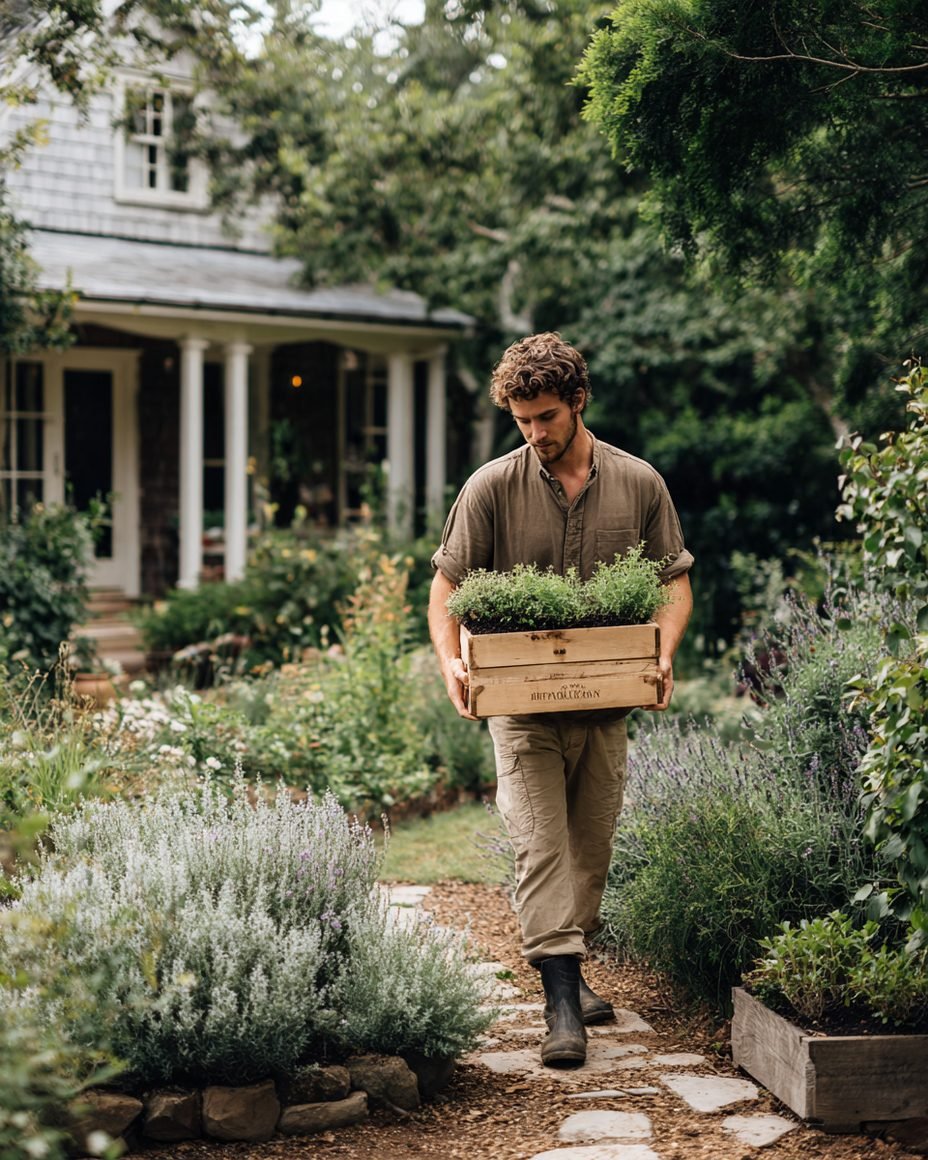
Think vertically when floor space is tight: railing planters, wall-mounted pockets, a tall narrow planter in the corner. Herbs are the gateway plant because they are useful: basil, mint, and rosemary forgive beginners and earn their spot in the kitchen. Start with three to five plants, learn what thrives, and expand from there. The goal is a balcony that smells like something, not a botanical garden.
Solve storage or the clutter will win
Every small balcony faces the same enemy: it becomes the place where things go to be forgotten. The drying rack migrates out there. The dead plant stays because removing it feels like a chore. Beat this with dedicated, attractive storage: a slim deck box that doubles as a bench, a wall-mounted cabinet, hooks for tools. Everything on the balcony should have a home, just like inside.
This is also an organization principle worth applying ruthlessly: if it would not belong in your living room, it does not belong on your balcony. The moment the space starts collecting overflow from inside the apartment, it stops being an outdoor room and goes back to being a storage annex. Protect the room. It is small, so every square inch is doing work.
Give it a job: the outdoor room test
The final step is the one that makes it all stick. Decide what the balcony is for. Morning coffee. Evening wind-down. Reading on weekends. A tiny herb garden you actually cook from. A room with a purpose gets used; a room without one becomes decoration, and then storage, and then the place with the dead plant.
Then use it on purpose for two weeks. Coffee out there every morning. Dinner out there twice a week. Notice what is missing and add only that. This is how the smallest room in the house becomes one of the most used: not through a single makeover, but through the slow accumulation of small decisions that say this space matters. A small balcony cannot change how much space you have. It can absolutely change how you live in it.