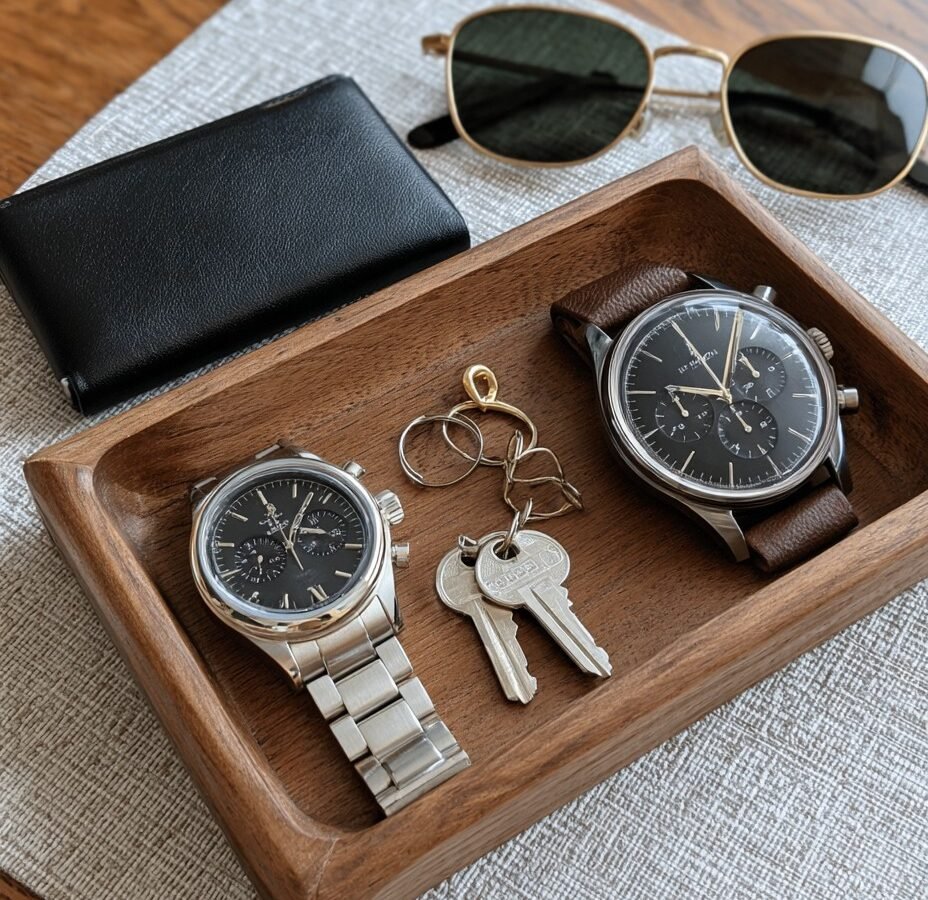

Every man reaches a point where his wrist feels unfinished. Not because he needs a status symbol, but because a good watch is one of the few accessories that works quietly in the background of a grown-up life. It tells time, yes, but it also tells the room something about the man: that he pays attention, that he finished the outfit, that he thinks in decades instead of seasons. The trouble starts when the first good watch becomes a research project about impressing strangers on forums instead of fitting the life you actually live.
Start with your wrist, not the brand
Watches are measured in millimeters, and those millimeters matter more than any logo. A 36 to 40mm case suits most wrists; the watch should sit comfortably with the lugs (the little arms that hold the strap) not hanging over the edges of your wrist. If you wear a lot of tailored clothing, a thinner case slides under a cuff without a fight. If your days are mostly casual, you have more freedom. Before you look at a single brand, hold a ruler to your wrist. Proportion is the difference between a watch that looks like yours and one that looks like you borrowed it.
Buy the versatile one first
Your first good watch will be worn more than any other, so it needs to survive your whole week: the office, the dinner, the weekend, the wedding you forgot about. A clean dial, a steel case, and a simple bracelet or leather strap cover nearly every situation. This is not the time for a bright dial or a complicated chronograph. Think of it like your first good suit. You do not start with the bold pattern. You start with the one that works everywhere, and you build from there.
Quartz is not a compromise
Watch culture loves to rank movements, and automatic mechanical movements get the glory. But an honest quartz movement keeps better time, needs no servicing, and costs less, which means more of your budget goes into the case, the finishing, and the strap. If the romance of a sweeping second hand matters to you, buy the automatic and enjoy it. If it does not, refuse to let anyone make you feel cheap about quartz. The watch serves your life. Your life does not serve the watch.
Comfort decides whether you wear it
A watch that sits in a drawer is an expensive lesson. Try the watch on, wear it around the store, and pay attention to weight and balance. A heavy watch that looks great for ten minutes can become annoying by hour six. Straps matter here too: a bracelet is durable and dressy, leather is warm and classic, and both can be swapped to change the whole personality of the watch. The right first watch should feel like it was always there.
Maintenance is simpler than it sounds
A good watch asks very little of you. Keep it away from magnets and hard knocks, rinse it after salt water, and have the seals checked every few years if you actually swim with it. An automatic movement appreciates being worn regularly; a quartz movement asks only for a new battery every couple of years and a pressure check to keep its water resistance honest. That is the whole maintenance program. If a watch needs more care than a houseplant, it is not a first good watch.
Judgment beats budget
Here is the open secret of the watch world: a well-chosen watch at a modest price impresses knowledgeable people more than an expensive watch chosen badly. What reads as taste is restraint, proportion, and appropriateness. A simple 38mm watch on your wrist at a business dinner says more about you than a giant branded piece ever will. Buy what fits your life, wear it daily, and let the second watch, the fun one, the statement one, come later. The first good watch is a foundation, not a trophy. Build on it.
2 Comments